




mytem360
Control Telecom Costs, Assets and Invoices From One SaaS Platform
When telecom costs, mobile assets, invoices, contracts and orders sit in separate systems, your team spends too much time reconciling data before it can act. mytem360 centralizes the information you need to manage fixed and mobile lines, endpoints, accessories, invoices, budgets, usage, orders, contracts and equipment carbon footprint. Built for IT, Finance, Procurement, and CSR teams, mytem360 gives each user a clear view of their scope, so they can work faster, reduce manual checks and make better decisions. We update our software each quarter to adapt to our clients’ evolving needs.
Home page
Key features:
- Personalized dashboard based on each user’s authorized scope.
- Centralized visibility on telecom costs, inventory, orders, usage and carbon footprint.
- Advanced filters by organization, provider, segment, product type, line, billing account or site.
- Drill-down navigation from consolidated views to detailed records.
- Visual widgets for cost trends, roaming, orders, equipment and carbon indicators.
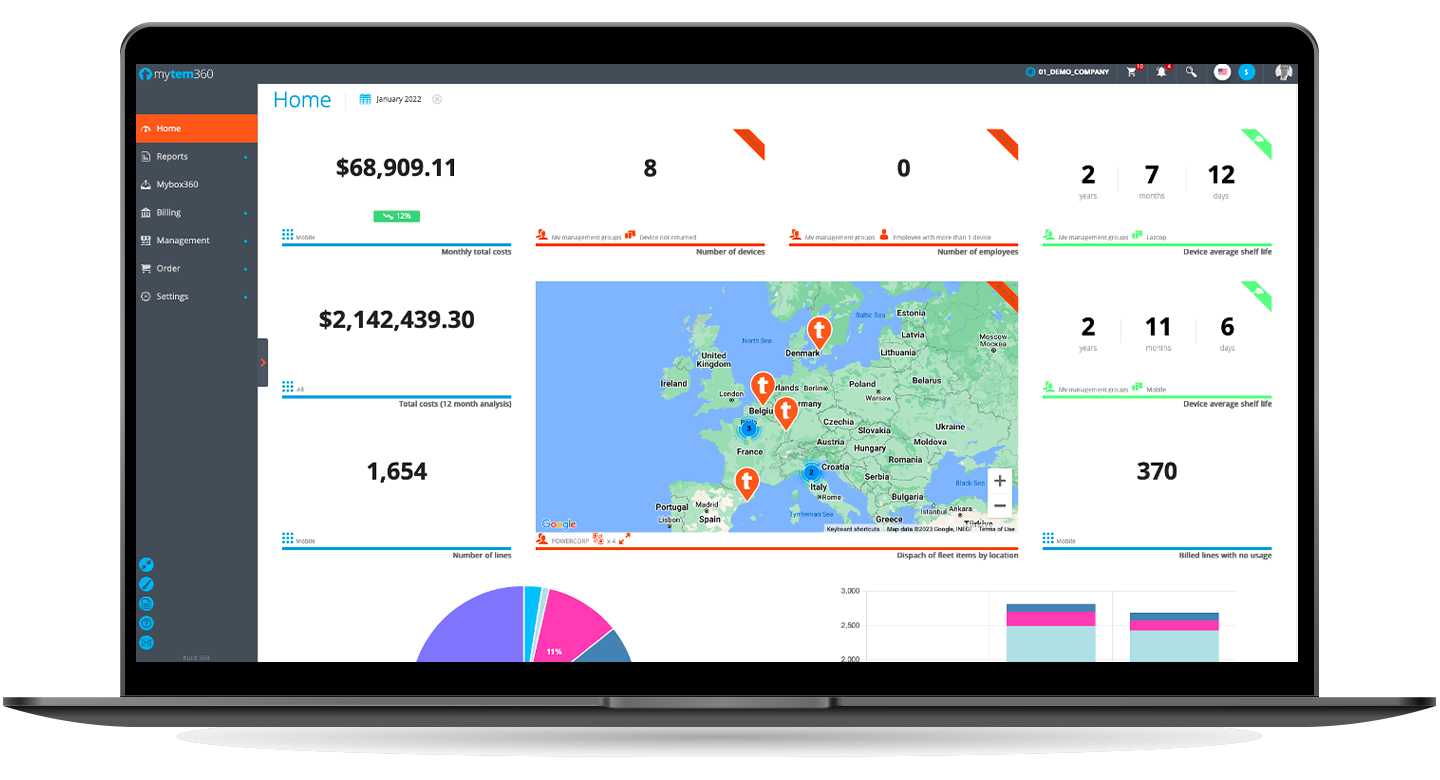
Your teams immediately detect cost increases, identify the affected line items, and trigger priority actions. By centralizing spending, inventory, usage, orders, and carbon data in a single interface, the platform reduces manual tasks and speeds up controls.
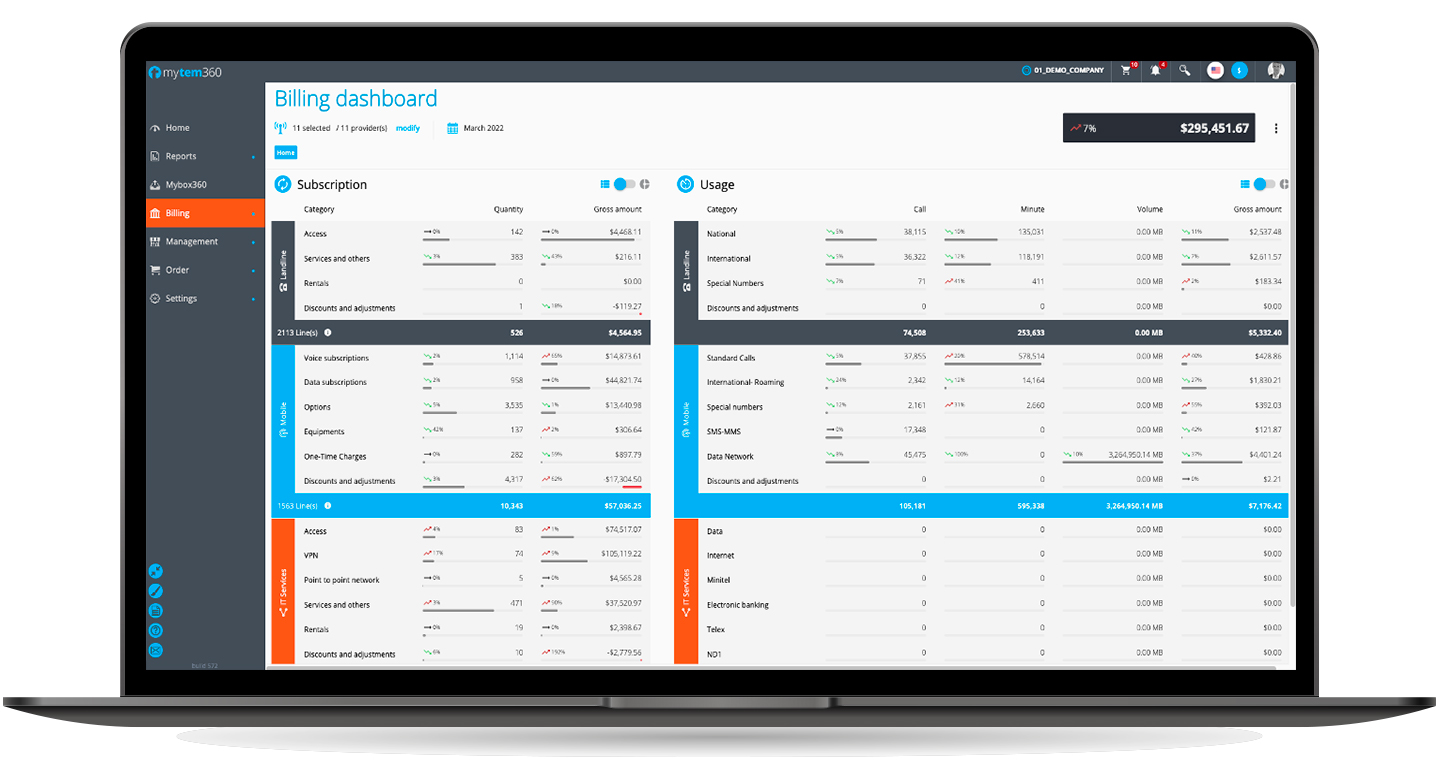
Financial dashboard
Key features:
- Billing analysis across fixed, mobile and data services.
- Provider invoice data consolidated over up to 24 months.
- Drill-down from global cost view to a specific telecom line.
- Clear breakdown of subscriptions, usage, one-time charges, discounts, adjustments, penalties and taxes.
- Cost tracking by entity, provider, billing account, product category and usage pattern.
This module enables you to identify the root causes of variations, improve the reliability of your budget forecasts, and maintain a documented basis for discussions with providers.
Reports
Key features:
- Reports available at global, entity, user and line level.
- Standard reports included in the platform.
- Custom reports available when a specific format is required.
- Report distribution console to manage delivery to the right users.
- Reporting areas covering costs, inventory, usage, orders, SLA tracking, fixed services, mobile services and connection statistics.
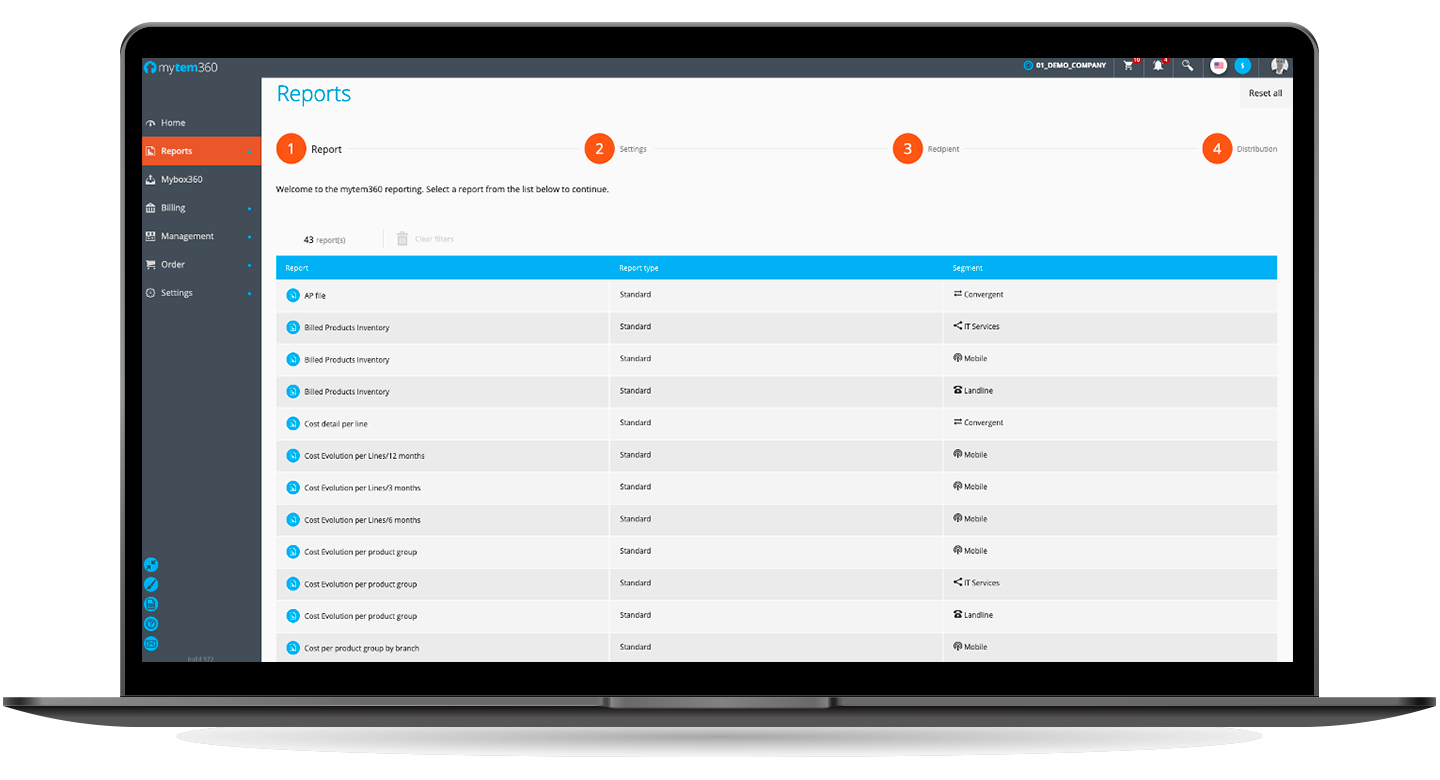
Your teams can more easily share the right information with the right stakeholders and use a single, shared dataset to track costs, inventory, usage, orders, and SLAs.
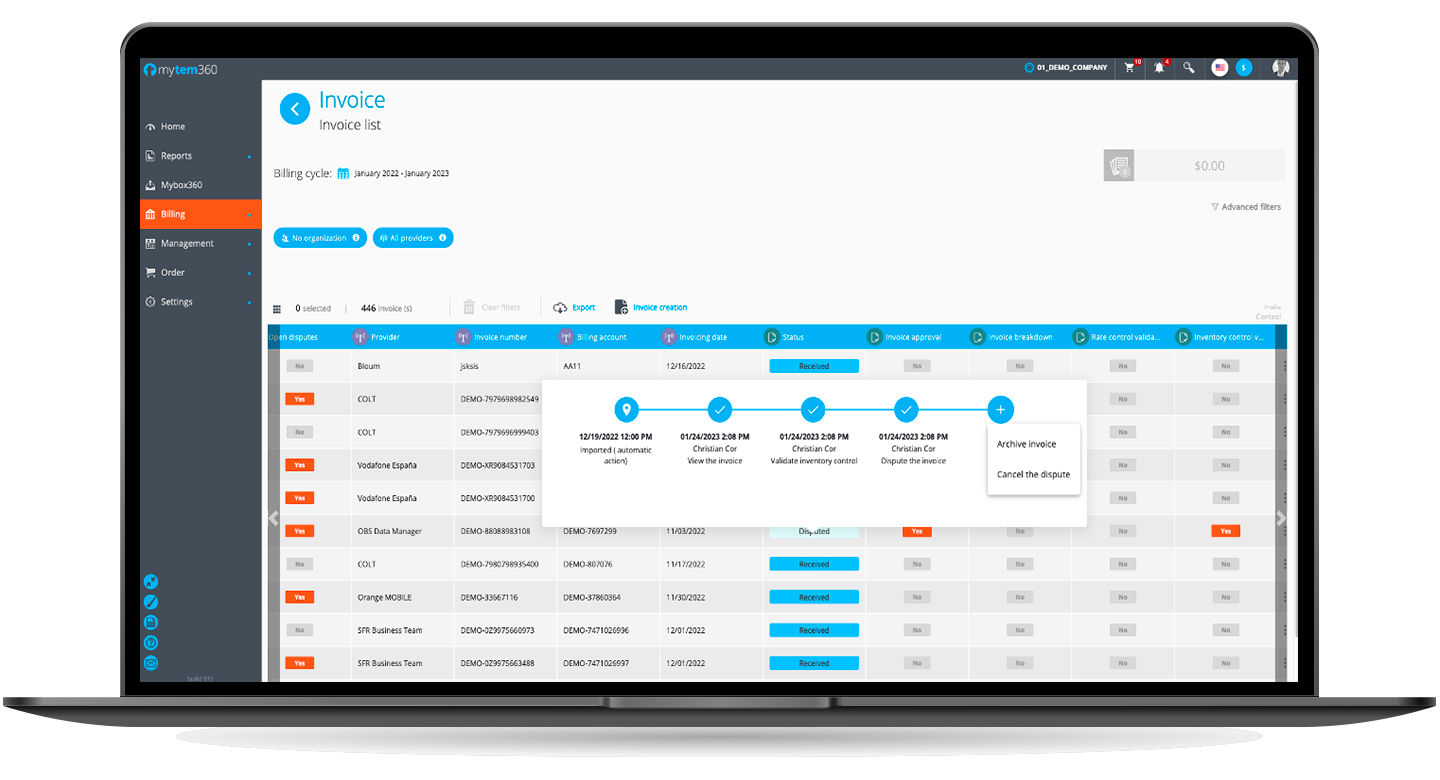
Invoice processing & verification
Key features:
- Centralized provider invoices with invoice details, status, dates and billing periods.
- CDR integration visibility for usage and billing control.
- Automatic checks of billed products, subscriptions, options, rates and discounts.
- Comparison between billed prices, contracted prices, inventory data and budget profiles.
- Alerts for billing errors, unassigned lines, over-budget lines and services outside the active customer base.
Billing discrepancies become easier to explain, document, and dispute with suppliers. This allows you to obtain corrections or credit notes more quickly, while reducing the risk of seeing the same errors appear on future invoices.
Manage budgets
Key features:
- Budget forecasts defined for a specific accounting period.
- Budget allocation by organization node, customer structure or provider structure.
- Comparison between actual costs, projected costs and budget limits.
- Visual indicators showing whether each node is within or above budget.
- Alerts and recipient settings for forecast overruns or budget thresholds.
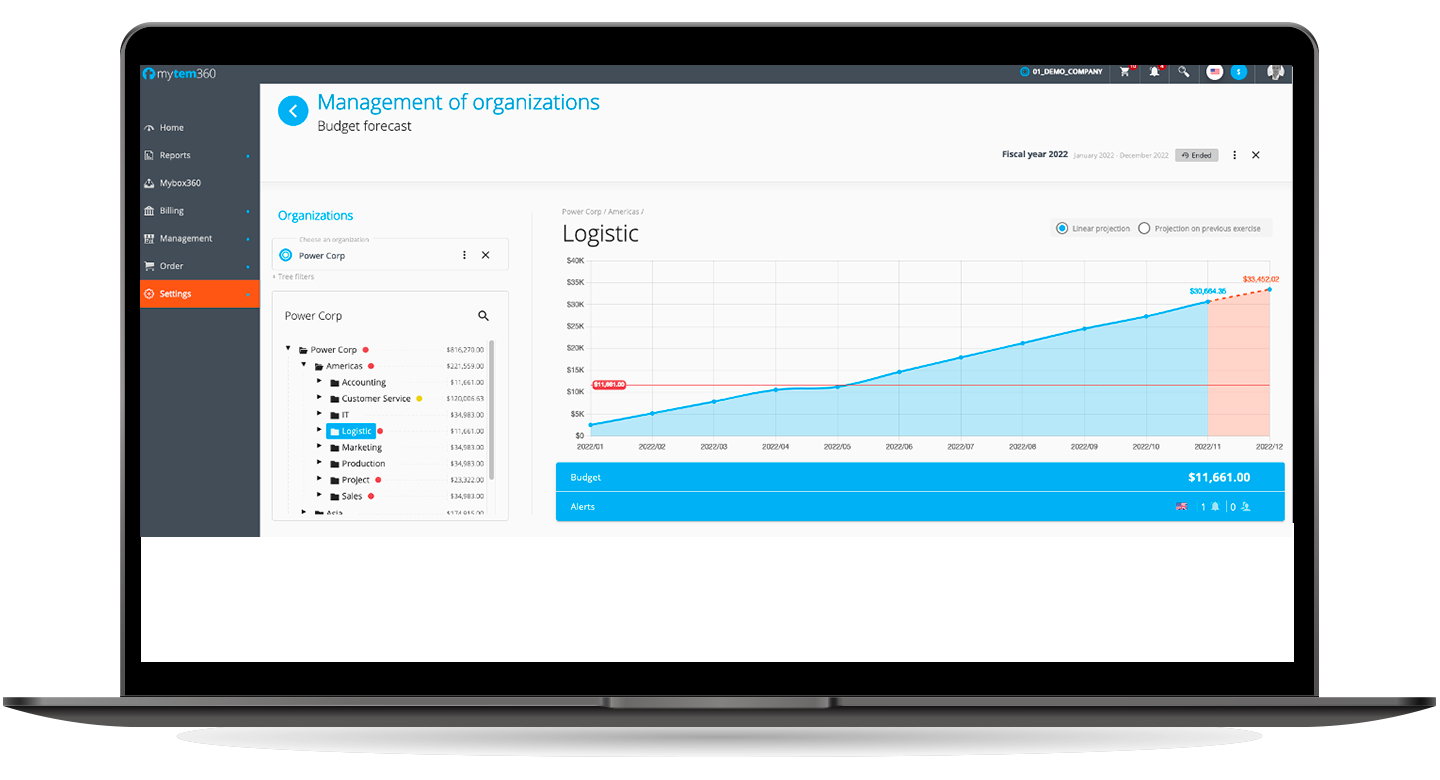
Finance teams can compare telecom expenses with forecasts without multiplying tracking files. Budget variances become clearer by entity, structure, or supplier, making it easier to support decision‑making, internal reviews, and stakeholder accountability.
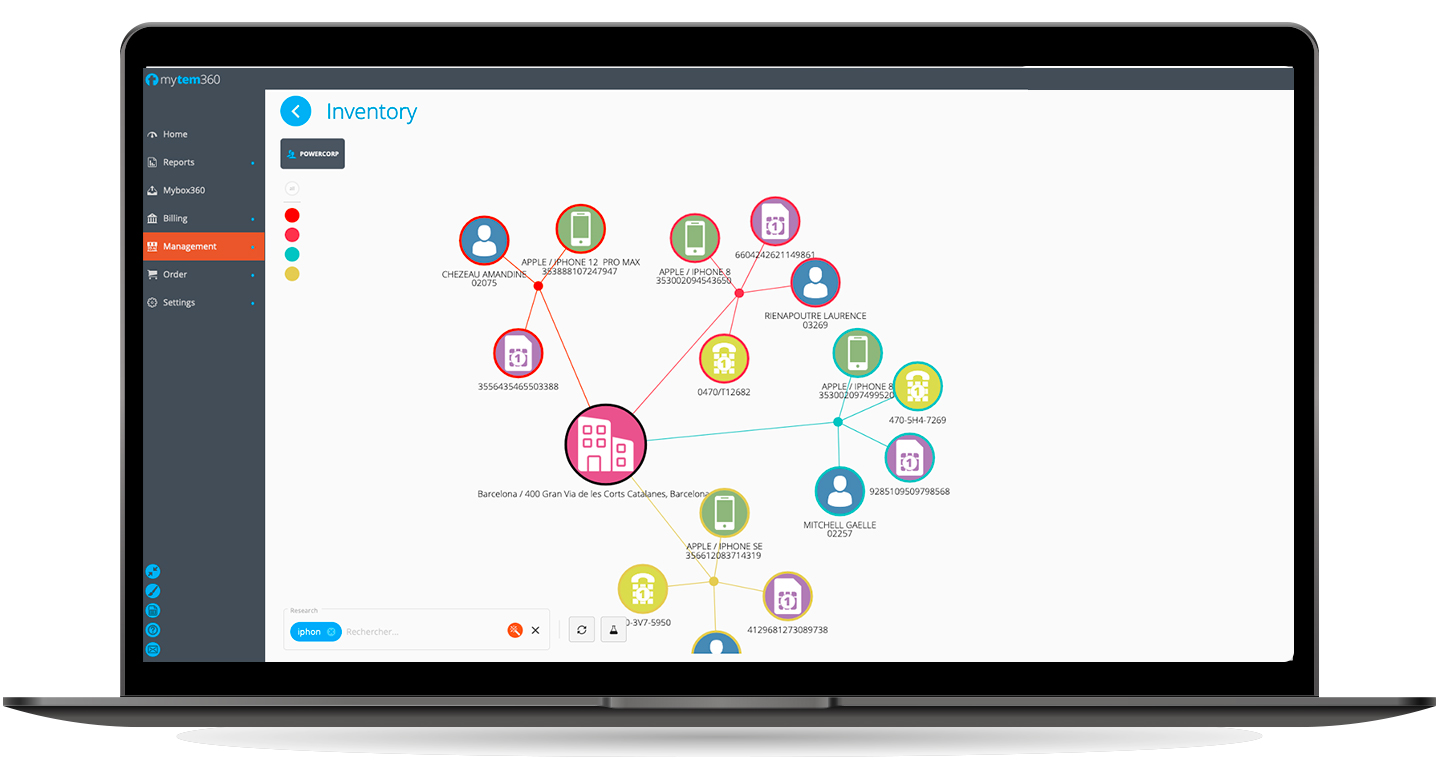
IT asset management
Key features:
- Centralized inventory for users, devices, accessories, fixed and mobile lines, SIM cards and services.
- Employee records showing sites, assigned equipment and assigned lines.
- Detailed device and line records, including IMEI, serial number, SIM, line status, provider, contracts and carbon data.
- Configurable management groups, permissions, organizational structures, billing accounts, HR data and accounting references.
- Bulk imports, automatic change logs and Microsoft Intune integration for enriched device data.
You gain full visibility into the equipment, lines, and services assigned to each user. Your teams can validate allocations, update inventory more easily, and maintain better control over the telecom and mobile estate.
Order management
Key features:
- Custom workflows for ordering devices, lines, subscriptions, options and accessories.
- Provider connections through email or API.
- Catalog-based ordering for approved devices, plans, services and internal services.
- Order tracking with status, type, date and amount filters, plus export options.
- Stock management for device pools, replacement units and staged deployments, with full action history.
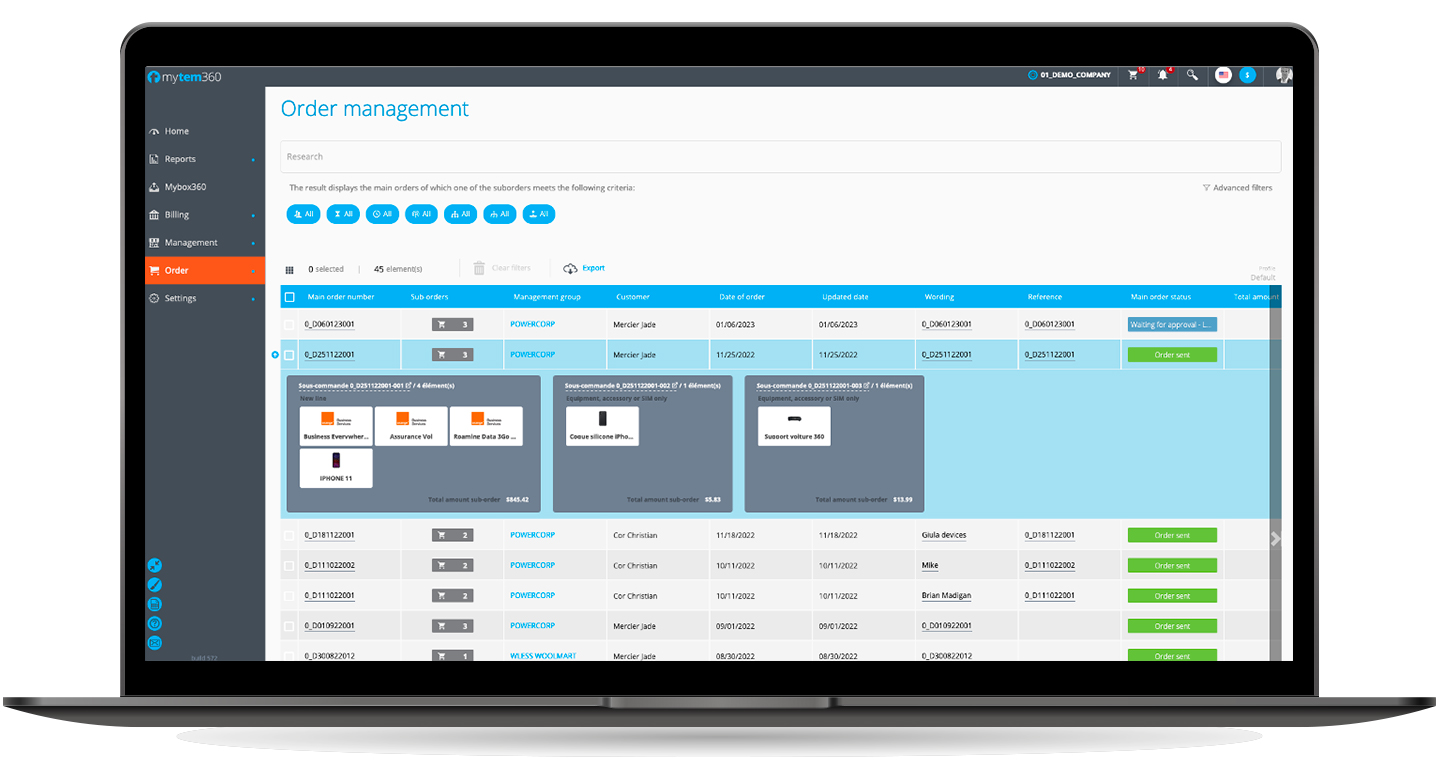
With this module, you can oversee every request for a device, line, plan, or accessory from creation to completion. You can track order progress, available stock, and equipment being replaced or deployed, without multiplying emails, tracking spreadsheets, or supplier portal logins.
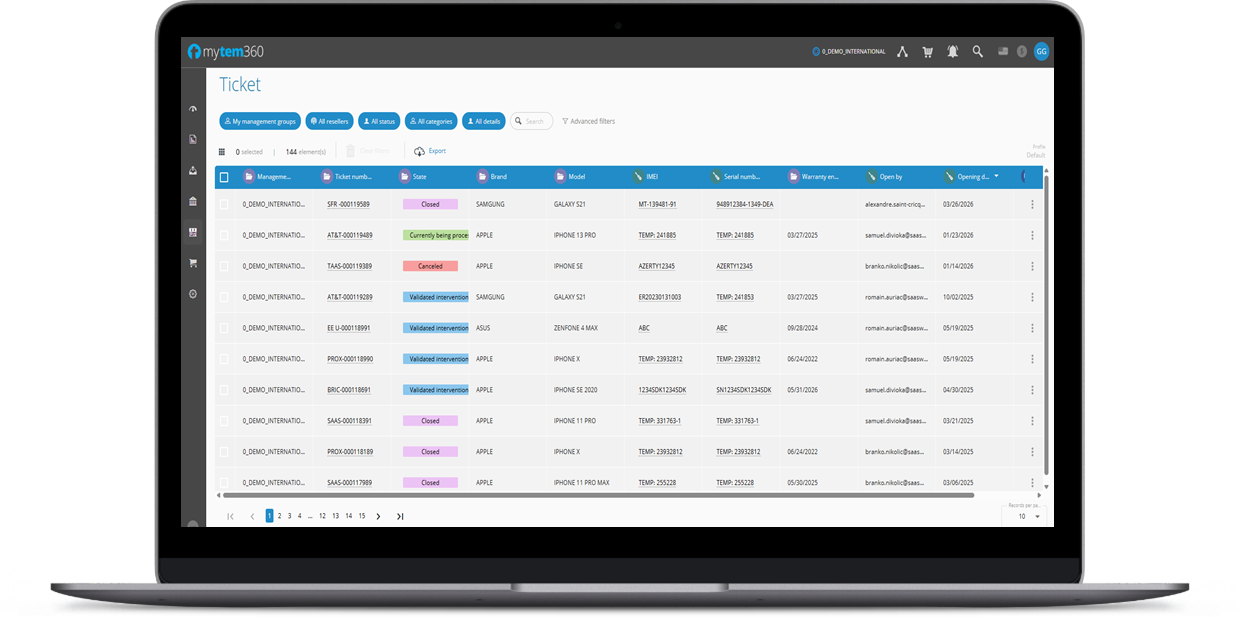
Ticket and After-Sales Module
Key features:
- Centralized table for equipment incidents and after-sales service actions.
- Direct access to incident sheets, resolution steps, action logs and exports.
- Custom workflows with steps, labels, status rules, failure categories and ticket profiles.
- Automatic closure rules and email notifications.
- Filters by management group, failure category, failure details and period.
This module allows you to manage device incidents and after‑sales service requests from a central point. Your teams keep a clear history of actions taken, resolutions provided, and replacements initiated, reducing information loss and improving the quality of mobile support.
Carbon Footprint Management
Key Features:
- Automatic calculation of the carbon score for each device in the inventory.
- Carbon footprint data associated with each equipment model.
- Calculation models based on research conducted by Saaswedo.
- Visibility into the evolution of the company’s digital carbon emissions.
- Monitoring of the impact of lifecycle management decisions and improvement initiatives on the overall carbon footprint.
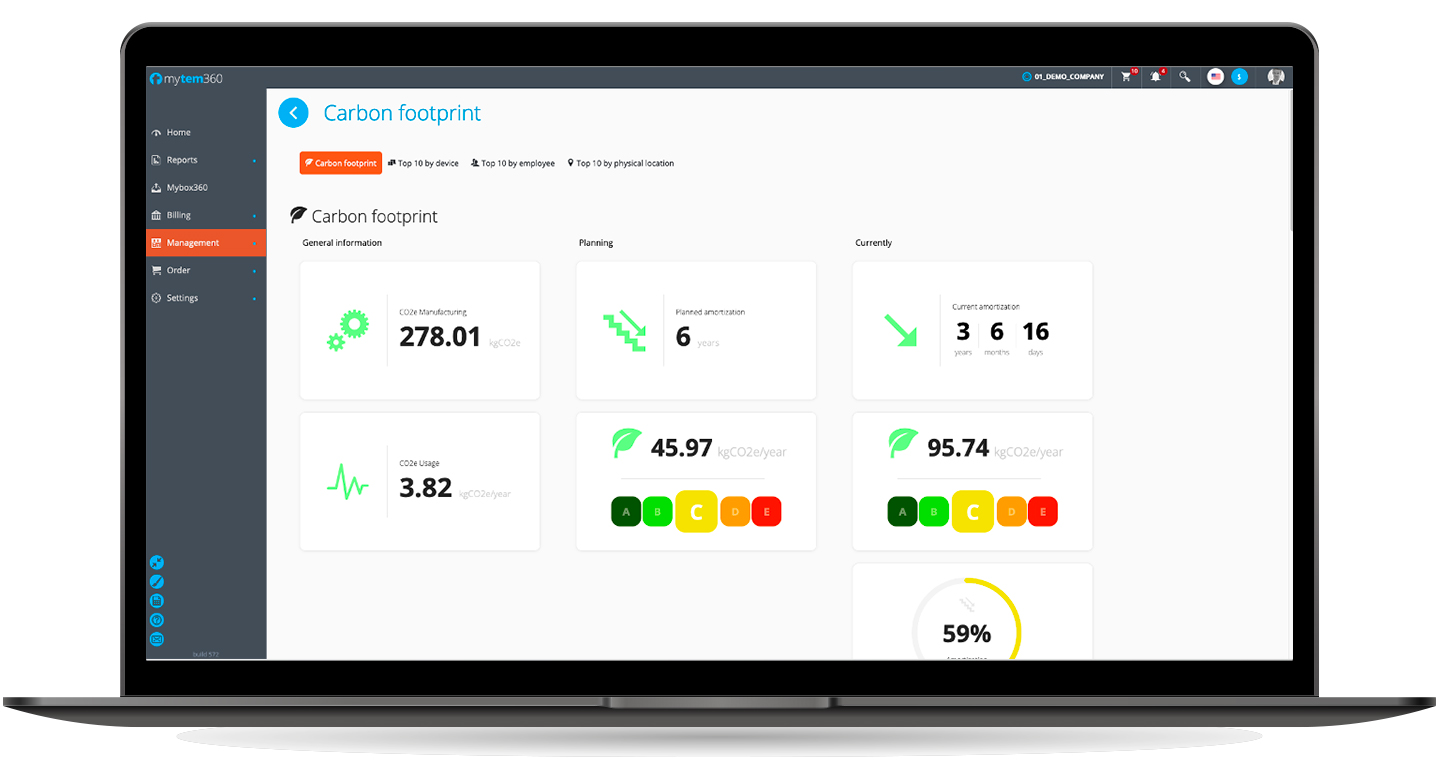
You gain access to real environmental impact tracking for your mobile fleet. Each device includes actionable carbon data, enabling you to measure the effects of renewal, reuse, or recycling decisions and improve the accuracy of ESG reporting.
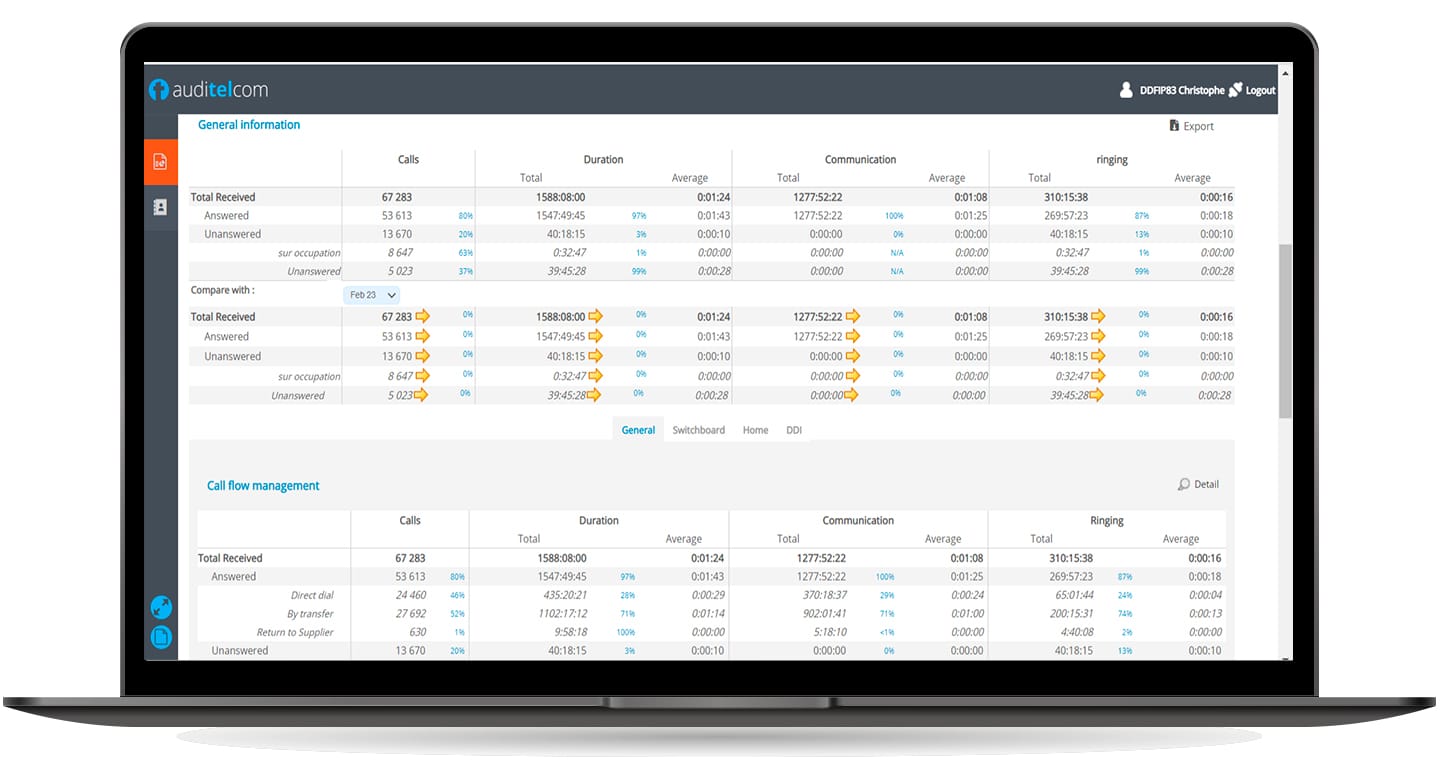
Related software: Auditelcom
Key Features
- Dashboards for monitoring fixed-line telephony usage, including incoming traffic, missed calls, and call volumes.
- Analysis by time slot, extension, waiting time, and call duration.
- Reporting tools to help reception teams optimize staffing levels, opening hours, and service coverage.
- Real-time analysis of call traces to detect unusual call volumes or suspicious destinations.
- Alert thresholds to identify potential phreaking attacks and reduce financial exposure.
With Auditelcom, you can better leverage fixed‑line telephony data to manage reception and secure usage. You can more clearly identify peak load periods, missed calls, and extensions requiring attention, while receiving alerts to react quickly to unusual calling behaviors or phreaking risks.
API
Key features:
- Public and specific APIs to connect mytem360 with external information systems, suppliers, distributors, and compatible operators.
- Order‑related endpoints: order consultation, sub‑order tracking, status updates, references, and tracking links.
- Asset management endpoints: consultation and updates of employee records, equipment, SIM/SAM cards, and phone lines.
- Synchronization of organizational data: sites, locations, management groups, branches, managers, suppliers, and billing accounts.
- Import flows, automated exports, and documented exchanges following the protocols and processes defined by Saaswedo.
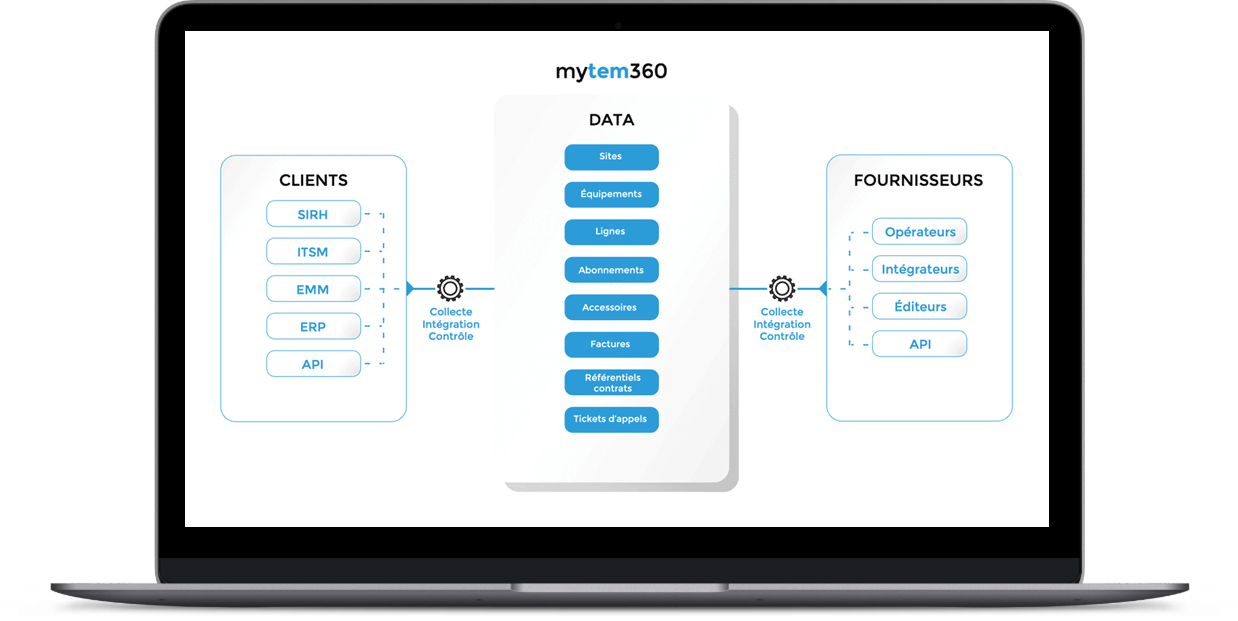
The APIs strengthen operational continuity between mytem360, internal information systems, and external partners involved in telecom and mobile management.